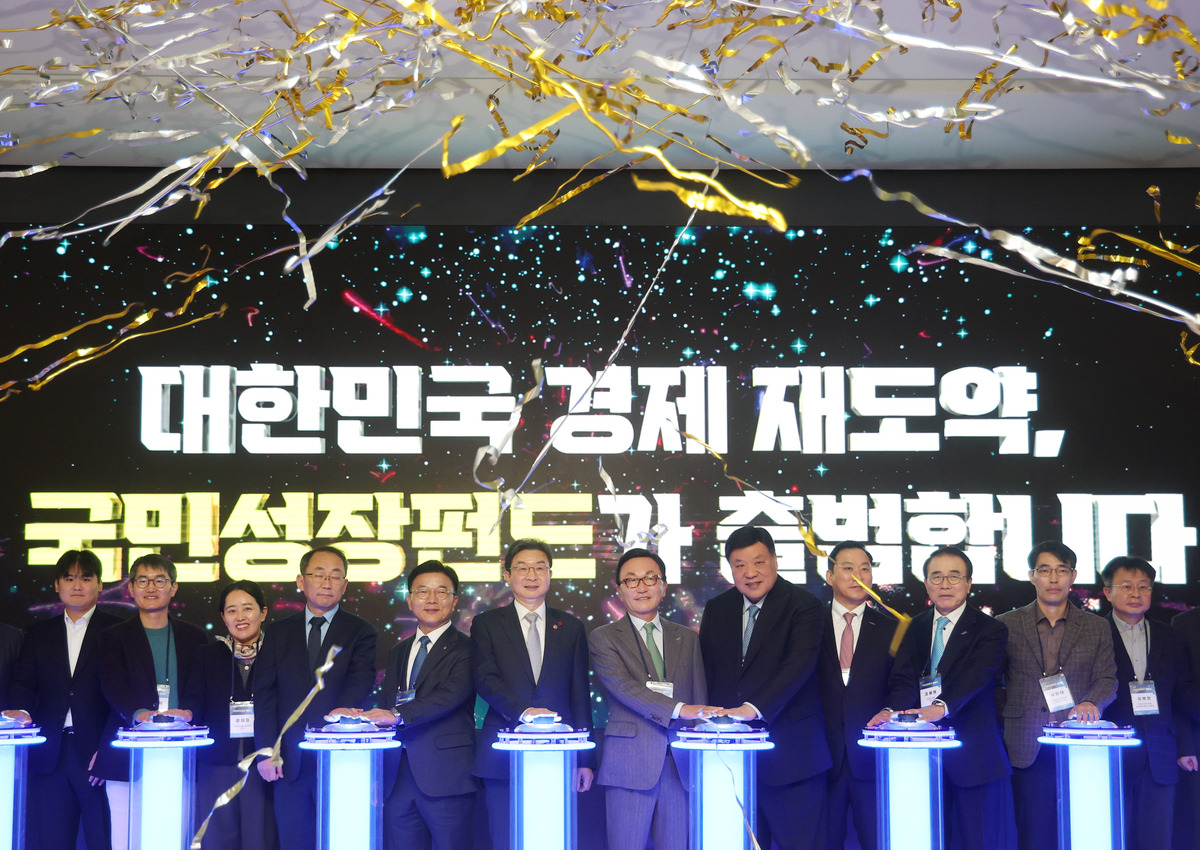
Projects selected as the National Growth Fund Nos. 2 and 3 investment destinations are the construction of a next-generation secondary battery materials plant by Isu Specialty Chemicals and the establishment of an artificial intelligence (AI) semiconductor cluster by Samsung Electronics.
The Financial Services Commission said on the 26th that, at the National Growth Fund Investment Management Deliberation Committee, it approved an agenda to provide low-interest loans for the ‘Ulsan next-generation secondary battery materials plant construction project’ and the ‘Pyeongtaek Line 5 AI semiconductor cluster construction project’. Following the ‘Sinan-Uui offshore wind power project’ approved in January, the two projects will become the National Growth Fund Nos. 2 and 3 investment destinations.
The next-generation secondary battery materials plant project supported by the National Growth Fund will build an Isu Specialty Chemicals lithium sulfide (Li2S) production plant in Onsan-eup, Ulju-gun, Ulsan Metropolitan City. Lithium sulfide is a core material for next-generation secondary batteries known as all-solid-state batteries, which offer high capacity, fast charging speed, and lower heat generation for greater safety.
Isu Specialty Chemicals plans to invest large-scale funds through the end of 2029 to build the plant. Of this, the National Growth Fund Advanced Strategic Industries Fund will provide a long-term loan of 100 billion won at an interest rate in the low 3% range for 10 years.
In the case of the Pyeongtaek Line 5 AI semiconductor cluster project, it is a semiconductor plant being built at the Samsung Electronics Pyeongtaek Campus. The total cost is expected to exceed 60 trillion won, and Samsung Electronics is proceeding with facility investments in stages. For the first-phase investment currently under way alone, a total of 8.8 trillion won is being invested, and the advanced fund plans to provide 2 trillion won of this as a low-interest loan for five years. The five major banks will also provide a total of 500 billion won at rates in the 3% range.
Taking this loan support as an opportunity, Samsung Electronics plans to significantly expand win-win programs to support small and medium-sized and mid-sized partner companies and the semiconductor materials, parts, and equipment ecosystem, including processes and equipment. Specifically, it proposed creating, in cooperation with the Korea Credit Guarantee Fund, a special guarantee program of up to 200 billion won. If the Korea Credit Guarantee Fund, using contributions from Samsung Electronics, offers special guarantee products with lower fees and higher guarantee ratios to partner companies participating in the Pyeongtaek P5 project, those partners will be able to receive low-interest loans from banks.